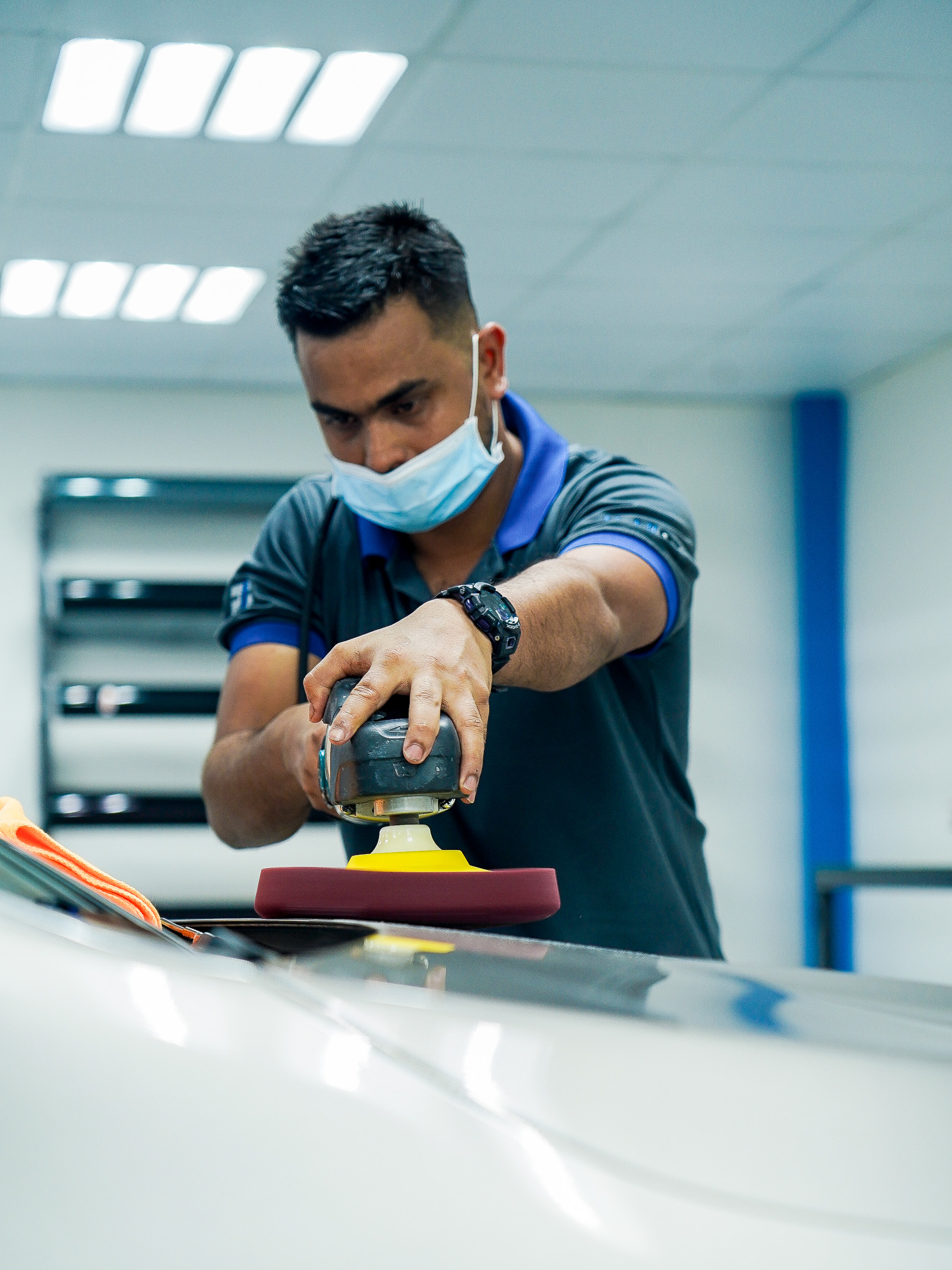
A better-looking finish and an added protective treatment are different goals. Polishing, paint protection film and coating can belong in the same conversation, but they are separate decisions. Start with the condition of your paint, the appearance you want and the areas you would like to protect before comparing a package name or price.
Current condition. Clear coverage. Confirmed material.
YOUR CAR / INFORMED CHOICESOwner guide · 26 October 2026
THE ESSENTIALS
Understand the choices.
Start with the differences that matter, then explore the detail for your car.
01
Polishing
Work on the existing finish to address its appearance, with the appropriate approach depending on surface condition. It is a different scope from applying protection film.
A physical film fitted over selected surfaces. The coverage, finish and material must be clear; a broad PPF label does not identify which panels are included.
An applied surface treatment with product-specific properties and care requirements. 212 Auto offers graphene-coating enquiries; confirm the actual material and intended result for your car.
Explain the marks or appearance you want addressed and share photographs of the whole car and affected areas. Mention repainted panels, existing film and any coating or other treatment, even when you do not know the exact product.
Ask which concerns are suitable for polishing or other preparation and which need a separate paint-repair discussion. Neither a film enquiry nor a coating name establishes that existing damage will disappear. The proposed result should be considered against the actual condition.
02 / IN DETAIL
Make the coverage visible
For PPF, list the panels and smaller areas under discussion. Bumper, bonnet, mirrors and door-edge coverage are different scopes from one another. Ask which areas are included and how the selected gloss or matte appearance relates to the current finish.
For polishing or coating, also clarify the surfaces and preparation included. Two estimates can describe very different amounts of work even if both use words such as full detail or protection. A clear area-by-area description is more useful than a label alone.
03 / IN DETAIL
Confirm the material and compatibility
Product properties, durability, support terms and care guidance vary. Ask which material is proposed and for the information that applies to that product. Do not transfer a film or coating claim from another manufacturer, another car or a different package.
Tell the workshop about treatments already present and discuss any planned combination of film and coating. Compatibility and preparation need to be confirmed for the chosen materials. A general guide cannot establish a universal installation sequence for every product.
04 / IN DETAIL
Understand the whole proposal
Vehicle shape, surface condition, preparation, coverage and chosen materials can affect the estimate. Ask which work is included before the protection is applied and whether existing film removal or paint repairs need a separate scope.
What appearance or protection goal are we addressing?
Which panels, preparation and materials are included?
What care and product support terms apply afterwards?
GOOD TO KNOW
Your questions.
Is polishing the same as applying a protective coating?
They have different purposes. Polishing concerns the appearance and condition of the current finish; a coating is a separate treatment. Confirm the preparation and protection included in the proposal.
Can film and coating be used together?
Some product systems allow a combination, but the materials and compatibility must be confirmed. Share what is already on the car and discuss the proposed specification rather than assume every combination is suitable.
Which option is best for my car?
That depends on its current finish and your priorities. Share photographs, previous paint or protection work and coverage preferences. The workshop confirms the appropriate scope, material and estimate directly.